The Ultimate Guide to Durable Concrete Coating Solutions
Environmental challenges make protection essential for concrete surfaces. Quality coatings boost both lifespan and visual appeal. Different options are present, each providing unique advantages. Learning about these types is critical for making wise choices. Moreover, appropriate application and care are essential components in securing permanent results. As the need for sustainable alternatives increases, environmentally friendly options are also appearing. What criteria should one assess when choosing the correct coating?
Understanding Concrete Coatings: What Are These?
Concrete coatings function as protective barriers placed on concrete surfaces, enhancing their aesthetic appeal and durability. Such coatings exist in various forms, like sealers, stains, and overlays, all created to fulfill distinct needs. Sealers form a defense against moisture and contaminants, while stains provide options for visual enhancement and coloring. Overlays can provide a textured finish, enhancing both appearance and slip resistance.
Concrete coatings may be adapted to suit the environmental conditions and intended purpose of the concrete surface. For instance, industrial environments may need coatings that endure heavy traffic and chemical exposure, while residential applications may focus on aesthetics and ease of maintenance. Proper surface preparation is crucial to ensure adhesion and longevity. Overall, concrete coatings fulfill a vital role in protecting and beautifying concrete surfaces, making them indispensable for diverse applications in both residential and commercial environments.
The Significance of Long-Lasting Concrete Coatings
Durable concrete coatings are fundamental to boosting surface protection, ultimately protecting from wear and environmental damage. Their power to enhance longevity and durability leads to significant cost savings through minimized maintenance requirements over time. Recognizing these advantages emphasizes the importance of investing in premium coatings for concrete surfaces.
Advanced Exterior Protection
Shielding surfaces from damage and environmental damage is crucial in sustaining the longevity of structures. High-quality concrete coatings provide a robust barrier that protects concrete from damaging elements such as moisture, chemicals, and UV radiation. By implementing these coatings, property owners can significantly decrease the risk of degradation, cracking, and staining, which are often triggered by exposure to extreme conditions. Additionally, enhanced surface protection promotes safety by enhancing traction and decreasing slip hazards in heavily-used areas. These coatings also streamline maintenance efforts, as they resist dirt accumulation and make cleaning more efficient. In summary, investing in durable concrete coatings is a wise decision that reinforces surfaces against potential deterioration, ensuring they remain functional and visually appealing for years to come.
Improved Longevity and Durability
Opting for high-quality concrete coatings substantially increases the lifespan and resistance of surfaces. These coatings provide a protective barrier against multiple environmental conditions, including dampness, chemicals, and UV radiation, which can deteriorate unprotected concrete over time. As a result, surfaces coated with superior coatings display improved resistance to breaking, chipping, and staining. Additionally, the application of these coatings can considerably reduce the occurrence of repairs and replacements, guaranteeing that the concrete remains serviceable and aesthetically attractive for years. The longevity delivered by long-lasting coatings not only strengthens the structural integrity of concrete surfaces but also supports the overall safety and usability of spaces, making them suitable for both residential and commercial applications.
Affordable Maintenance Services
Although numerous property owners look for quick fixes for surface upkeep, the extended benefits of concrete coatings can substantially lower overall expenditures. High-quality concrete coatings work as a safeguarding barrier, preventing damage from moisture, chemicals, and wear. This forward-thinking method decreases the regularity and magnitude of required repairs, saving money over time. Moreover, these protective layers usually demand less frequent reapplication versus standard sealants, additionally strengthening their cost efficiency. Through purchasing quality concrete coating solutions, owners can lengthen the longevity of their surfaces while decreasing labor and material expenditures tied to maintenance. In the end, resilient concrete coatings embody a tactical, budget-friendly selection for upkeeping and preserving concrete surfaces long-term.
Concrete Coating Varieties: Which One Suits Your Needs?
When examining concrete coatings, it is essential to understand the distinctions between options like epoxy and polyurethane. Epoxy coatings offer strong adhesion and durability, making them suitable for high-traffic areas. On the other hand, polyurethane coatings deliver enhanced flexibility and resistance to UV damage, which can be favorable in outdoor settings.
Epoxy Coating Systems Overview
Epoxy finishes offer a versatile solution for improving the aesthetic appeal and longevity of concrete surfaces. Composed of resin and hardener, these coatings form a strong bond with the concrete, producing a robust, persistent finish. They are particularly effective in industrial and commercial settings, delivering resistance to stains, abrasion, and chemicals. Furthermore, epoxy coatings can be tailored in numerous colors and finishes, permitting creative design options. The application process usually involves preparing the surface, mixing the components, and meticulous application to secure an even finish. With their excellent adhesion additional resource and protective qualities, epoxy coatings are optimal for high-traffic areas, garages, and workshops. Their durability and effectiveness make them a favored choice among property owners seeking reliable concrete solutions.
Advantages of Polyurethane Coatings
For concrete surfaces, polyurethane coatings deliver unique advantages while complementing the benefits of epoxy coatings. Their exceptional flexibility is well-recognized, enabling them to endure thermal expansion and contraction without developing cracks. This robust characteristic makes them suitable for areas with varying temperatures. Moreover, polyurethane coatings display outstanding UV resistance, which prevents yellowing and breakdown from sun exposure while maintaining attractiveness over time. Their chemical resistance is also significant, safeguarding concrete from spills and harsh cleaning agents. Furthermore, polyurethane coatings create a shiny finish that elevates the appearance of concrete surfaces. Simple application processes and rapid curing times add to their appeal, establishing them as a favored option for residential and commercial uses.
Setting Up Your Surface for Application
A properly prepared surface is essential for the effective application of concrete coatings. This preparation process commences with a thorough cleaning to remove dirt, grease, oil, and any prior coatings. Using power washing or a suitable degreaser can significantly enhance surface cleanliness. Subsequently, any cracks or imperfections must be addressed; this typically involves filling using a high-quality repair compound to guarantee an even surface.
After repairs are complete, the surface should be properly etched, especially when it is polished or smooth, to promote better adhesion of the coating. This can be accomplished with an etching solution or mechanical grinding. Finally, it is crucial to let the surface to dry thoroughly before proceeding. Correct surface preparation not only increases the adhesion of the coating but also lengthens its lifespan, ensuring that the final finish is aesthetically pleasing and durable.
Detailed Step-By-Step Process for Applying Concrete Coatings
Applying concrete coatings requires a methodical approach to guarantee excellent results. The process begins with ensuring the surface is dry and clean, free from debris and contaminants. Following this, the chosen coating material should be mixed based on the manufacturer's instructions, maintaining proper consistency.
Upon completion of preparation, the applicator should employ a roller or brush to evenly distribute the coating, beginning at one corner and working in a systematic manner to avoid overlaps. It is crucial to apply the coating in fine layers, letting each layer to dry thoroughly before proceeding to the next, as this promotes improved adhesion and durability.
When the required number of layers has been laid down, a sealer may be recommended to boost protection against daily wear. Finally, it is crucial to permit sufficient curing time prior to subjecting the surface to walking or driving traffic, securing longevity and effectiveness of the concrete coating.
Key Things to Avoid When Coating Your Concrete
Though numerous individuals concentrate on the steps to successfully coat concrete, it is equally important to be aware of common pitfalls that can compromise the outcome. One major mistake is neglecting surface preparation; not properly cleaning or etching the concrete can lead to poor adhesion and peeling. Additionally, applying the coating in unsuitable weather, such as extreme heat or humidity, may cause bubbling or an uneven finish. Failing to follow manufacturer instructions regarding mixing and application can result in unexpected performance issues, while rushing the drying time can trap moisture, leading to delamination. Applying an excessively thick layer to the surface can also create stress, resulting in cracks. Finally, skipping proper safety measures, such as wearing protective gear or ensuring adequate ventilation, can pose health risks and affect the application process. By avoiding these mistakes, one can achieve a more durable and aesthetically pleasing concrete coating.
Upkeep Recommendations for Long-Lasting Concrete Surfaces
To ensure the longevity of concrete surfaces, regular maintenance is essential. Routine cleaning should consist of sweeping or hosing off debris, guaranteeing that dirt does not accumulate and cause stains. For difficult stains, a mild detergent can be applied, but harsh chemicals should be avoided as they can degrade the coating.
Additionally, checking the surface for cracks and chips is critical. Any damage should be repaired promptly to avoid further deterioration. Adding a sealer every few years boosts protection against UV rays and moisture, prolonging the life of the coating.
Furthermore, not using abrasive tools during cleaning will help maintain the surface finish. In areas exposed to substantial traffic, using protective floor coverings can minimize wear. Ultimately, guaranteeing proper drainage around the concrete will stop water pooling, which can result in significant damage over time. Applying these maintenance tips can greatly increase the resilience of concrete surfaces.
How to Select Colors, Stains, and Textures for Your Floor Coating
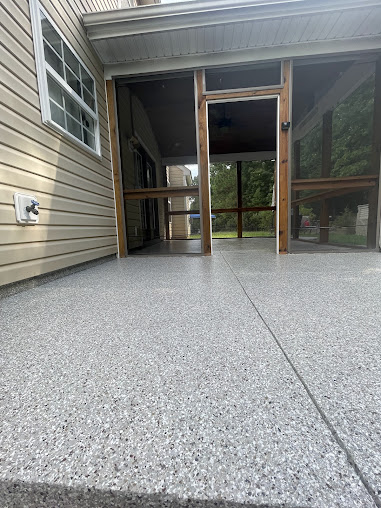
Choosing the right stains, colors, and textures for a concrete coating can significantly enhance both appearance and functionality. When choosing stains, it is vital to factor in the environment and intended use of the space. For high-traffic areas, a durable stain that resists fading and wear is critical. Color selection should complement the surrounding architecture and landscape; neutral tones often provide versatility, while bold colors can make a statement.
Textures can add visual interest and boost safety by offering better traction. You can choose from smooth finishes for a modern look or textured surfaces for added grip. It's also important to reflect on maintenance; some finishes may demand more upkeep than others. Finally, selecting the right combination of stains, colors, and textures will establish a cohesive aesthetic while guaranteeing the concrete coating functions properly in its intended environment.
Environmentally Friendly Options for Concrete Coatings
As sustainability becomes progressively important, eco-friendly alternatives for concrete coatings have gained traction among environmentally conscious homeowners and professionals alike. These coatings are formulated to reduce environmental impact while offering durable protection for concrete surfaces.
Among the leading choices are water-based polyurethanes and acrylic sealers, as they emit fewer volatile organic compounds (VOCs) when compared with traditional solvent-based products. Natural coatings derived from biological sources produced from renewable resources, including plant oils and resins, are also becoming more popular for their reduced toxicity levels and biodegradable properties.
In addition, recycled components are being incorporated in some formulations, additionally reducing ecological footprints. These sustainable options not only extend the longevity of concrete surfaces but also support healthier indoor air quality and reduced environmental harm. As awareness of sustainable practices develops, the demand for eco-friendly concrete coatings is expected to continue its upward trend, indicating a shift towards more eco-friendly construction methods.
Common Questions
How Long Does It Take for Concrete Coatings to Cure Completely?
Concrete coating systems generally need one to three days to initially cure, though complete curing can take as long as 30 days, depending on factors such as temperature, humidity, and the specific type of coating used.
Is It Feasible to Apply Concrete Coatings in Cold Weather?
Using concrete coatings in cold weather is possible, but it demands specific products engineered for low temperatures. Professionals recommend monitoring temperatures and humidity levels to ensure proper adhesion and curing for best results.
What Tools Are Required for Concrete Coating Application?
To put on concrete coatings, one requires a paint roller, brushes, a paint tray, a sprayer, a pressure washer, a concrete grinder, and safety gear, including gloves and goggles, guaranteeing appropriate application and protection throughout the process.
Are There Any Safety Precautions During the Coating Application?
During coating application, operators should wear correct personal protective equipment, including gloves, goggles, and masks, ensure proper ventilation, prevent skin contact with chemicals, and follow manufacturer guidelines to decrease risks and maintain safe handling.
How Can I Remove Old Concrete Coatings Effectively?
To properly strip away old concrete coatings, you can use chemical strippers, pressure washing, or mechanical methods such as grinding. Each approach varies in efficiency, based on the coating type and the surface condition of the concrete.